For the production of *The Phantom of the Opera*, the aim was not merely to provide sound and lighting. The client’s brief BRAND CONSULTING It was much more challenging. We needed to create an environment in which the audience member becomes part of the action and ceases to perceive the boundary between the stage and the space around them. Every voice, every lighting transition and every dramatic moment had to support a single common goal: to keep the audience’s attention focused on the story. In a project like this, it is not the amount of technology that matters. What matters is the ability to transform technology into emotion.
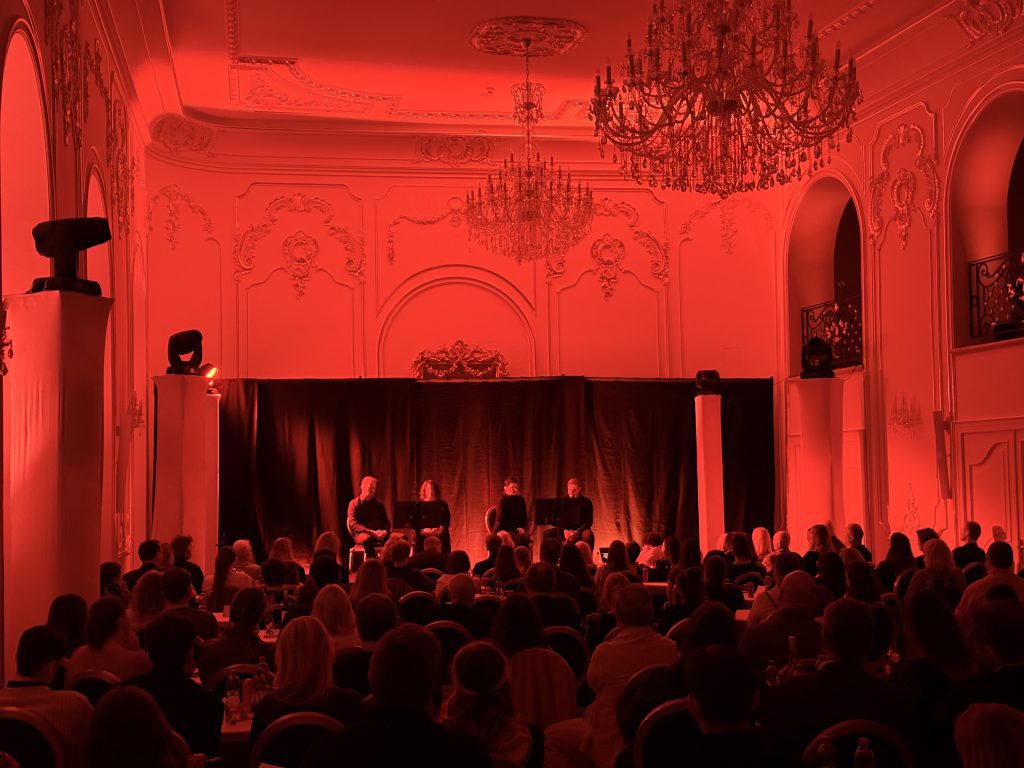
Historic venues such as Šimák Castle in Pezinok are among the most impressive event and cultural venues. At the same time, however, they present one of the greatest challenges when it comes to creating a high-quality visitor experience. High ceilings, hard surfaces and ornate architecture create acoustic reflections that can negatively affect both the intelligibility and localisation of sound. What looks exceptional to the eye does not necessarily work for the ear.
That is why we did not start the project with the installation. We began by understanding the space.
Before the actual implementation, we carried out a detailed acoustic analysis of the hall. Through these measurements, we identified how sound behaved within the space and designed a solution that minimised unwanted reflections whilst maintaining the precise localisation of sound events throughout the performance. An equally important part of the preparation was a 3D simulation of the space. Even before installation, we were able to verify the direction of the audience’s attention, the lighting design and the interaction between the set design, sound and lighting. The result was more than just a theatre performance.
A coordinated immersive environment was created, in which sound, light and space functioned as a single system.
When it comes to immersive productions, there’s one question we always ask:
The answer lies in weaving all the production elements into a single narrative. For *The Phantom of the Opera*, we built the entire experience on three pillars:
– spatial audio and directional sound,
– lighting design that responds to the action,
– synchronisation via a timecode system.
In a conventional sound design, most of the sound comes from a single direction. For *The Phantom of the Opera*, we worked on the opposite principle. The sound became an integral part of the space. Voices, sound effects and dramatic moments appeared exactly where the play’s narrative required them to. The audience intuitively sensed where a particular moment in the plot was coming from, without being able to identify the technology behind it.
It wasn’t about the volume. It was about the location.
It is precisely directional sound and spatial audio Today, we also use them at conferences, congresses, gala evenings, exhibitions and immersive events, where they help to create a stronger emotional connection with participants.
Truly powerful experiences arise when sight and sound tell the same story. That is why we designed the lighting design as a natural extension of the sound design. Whenever a sound cue occurred in a specific part of the space, the lighting scene responded accordingly. The audience’s attention shifted naturally, without the spectator even realising it. The space thus helped to tell the story. The result was a greater sense of immersion in the plot and a stronger connection between the audience and the individual scenes.
The most complex productions do not rely on individual pieces of equipment. They rely on coordination. Sound, lighting and all the key dramatic moments were synchronised via a unified timecode system. Every effect, transition and change in atmosphere took place at a precisely defined moment. For the audience, this meant a seamless experience. For the organiser, it meant the assurance of a consistent result at every performance.
We begin every immersive project by understanding the space. An acoustic analysis of the historic hall enabled us to design a directional sound system with precise sound localisation and a minimum of unwanted reflections.

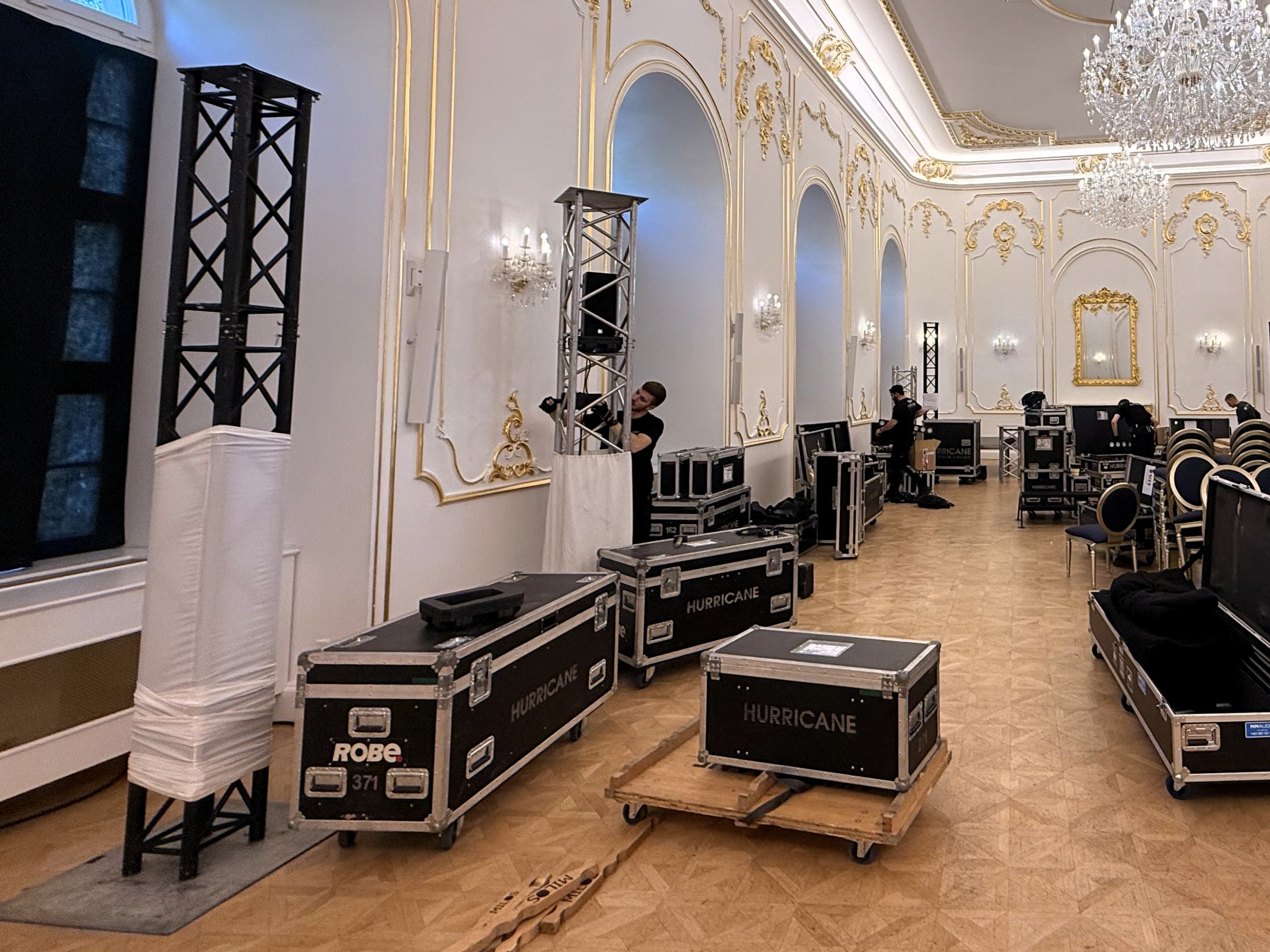
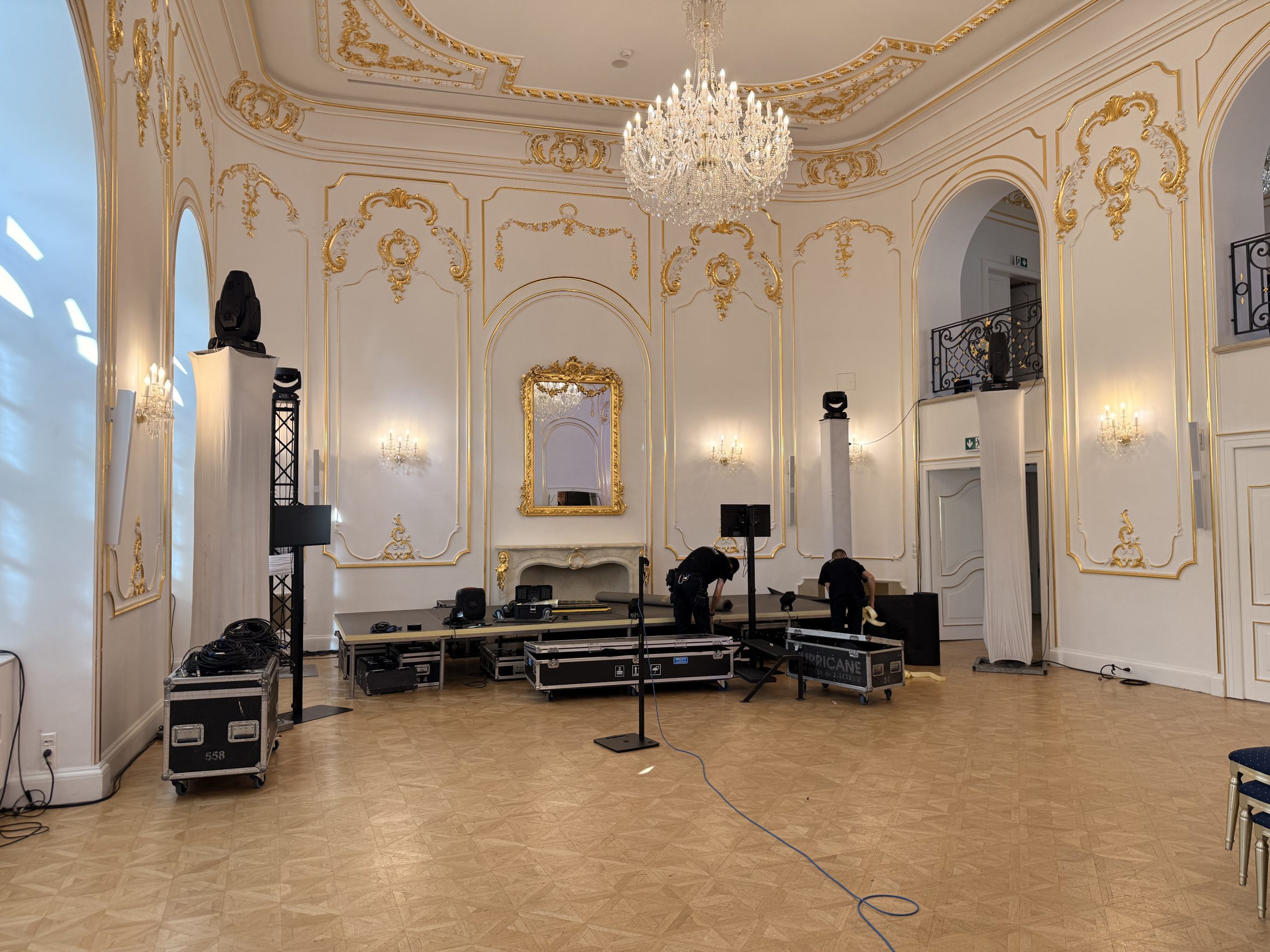
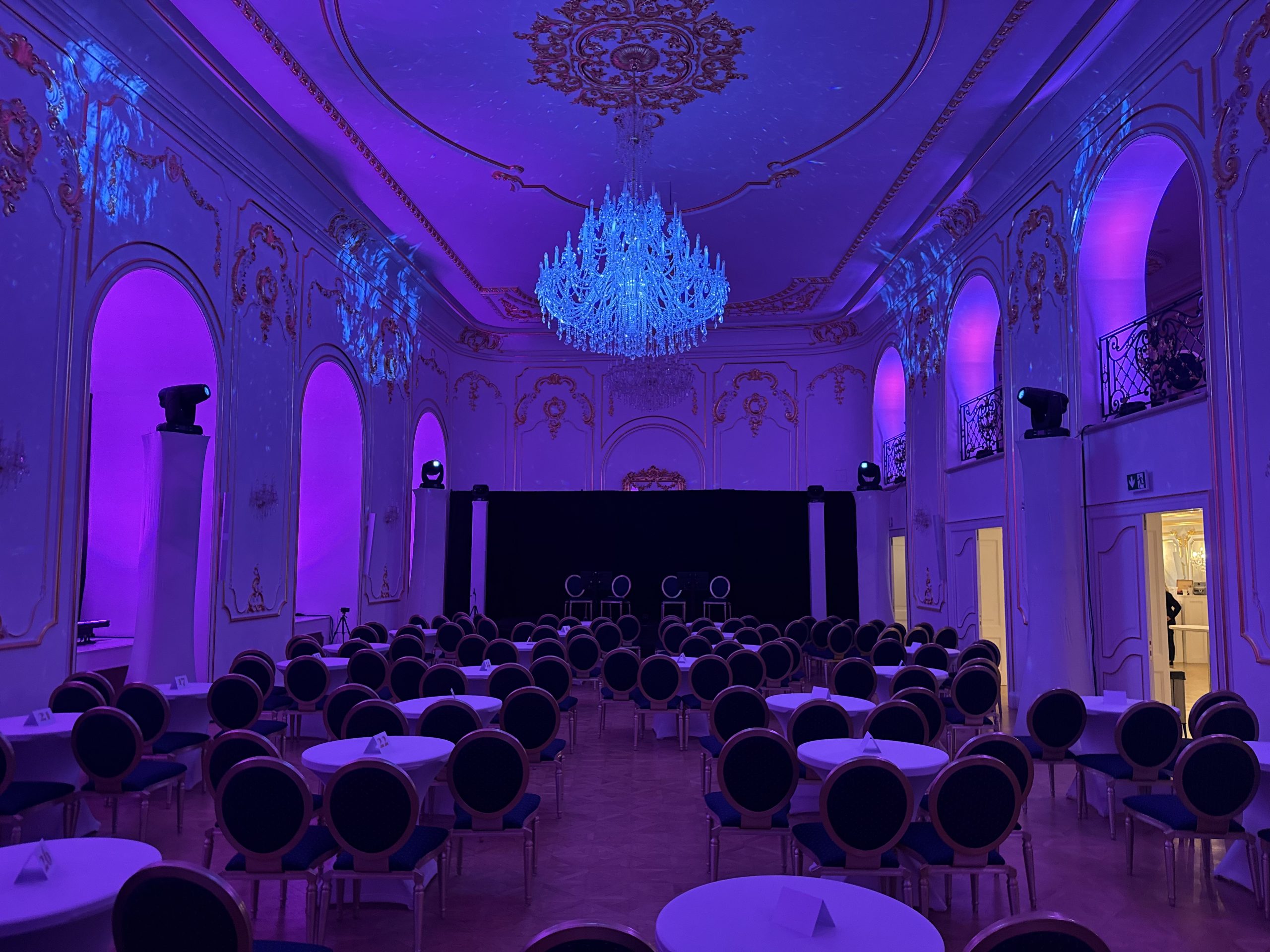
In carrying out the project, we focused on several key areas:
– to begin the project with a detailed acoustic analysis of the space,
– to design a directional sound system instead of a traditional front-facing sound system,
– to integrate lighting design with audio storytelling,
– to create a 3D simulation of the space before installation,
– synchronise all key elements using timecode,
– to ensure a consistent experience throughout the entire run of performances.
The result was not merely a performance. A space was created which the audience did not perceive as a hall full of technology. They perceived it as part of the story. And that is precisely the highest form of trust an audience can place in a production.
Solutions used – Immersive Experience Design
– Spatial Audio
– Directional Sound
– Spatial storytelling
– Timecode synchronisation
– Integrated lighting design
– Acoustic analysis of the space
– 3D simulation of the venue

– a single partner for the design of the experience, sound, lighting and production,
– a consistent audience experience throughout the entire run of performances,
– an environment that encourages greater emotional engagement from the audience,
– precise coordination of all production layers,
– a solution designed with a focus on reliable implementation,
– a partner capable of taking responsibility for the entire production outcome.
Although it was a theatre production, we apply the same principles today at conferences, congresses, gala evenings and brand experience events (brand experiences) and immersive events across Europe. Because regardless of the event format, the aim remains the same: to create an environment in which participants can focus on the content, the emotion and the experience. And the client can focus on their audience. Not on production risks.
About Hurricane
Hurricane is a creative and technical partner specialising in event production, from concept to execution, based in Bratislava. Since 1998, we have organised more than 5,900 events, including conferences, congresses, gala evenings, television productions, hybrid events and immersive experiences. As a member of the international AV Alliance, we ensure the reliable delivery of events across Europe and help clients create events that bring a sense of calm amidst complexity.
Spatial audio allows sound to be positioned at a specific point in space. The audience therefore does not perceive the sound as a single loud layer coming from the stage, but as a natural part of the environment. This technology is used in theatre productions, conferences, congresses and immersive events.
Directional sound is an approach to sound system design that enables the audience to intuitively determine the direction from which the sound is coming. It helps to increase the audience’s attention, spatial awareness and emotional engagement.
An immersive event comes about when sound, lighting, set design, content and the participants’ movements function as a single, coordinated system. Participants do not perceive the individual technologies, but rather the overall experience.
Historic spaces produce a multitude of acoustic reflections. Acoustic analysis helps to design a solution that ensures intelligibility, sound localisation and a consistent experience throughout the hall.
Traditional sound systems ensure that the space is filled with sound. Spatial audio adds a layer of localisation, allowing individual voices, effects and musical elements to be placed at specific points within the space.
The strongest effect is achieved when the sound and lighting design respond to the same moment simultaneously. The audience naturally finds their bearings in the space and perceives the content of the event more intensely.
Timecode ensures the synchronisation of sound, lighting, video and other effects. As a result, every element of the production takes place at a precisely specified time, and the outcome remains consistent throughout every performance or event.
3D simulation makes it possible to test the set design, visual dramaturgy, lighting design, guest movements and spatial sound even before the actual production takes place. It helps to minimise risks and increases the certainty of the outcome.